
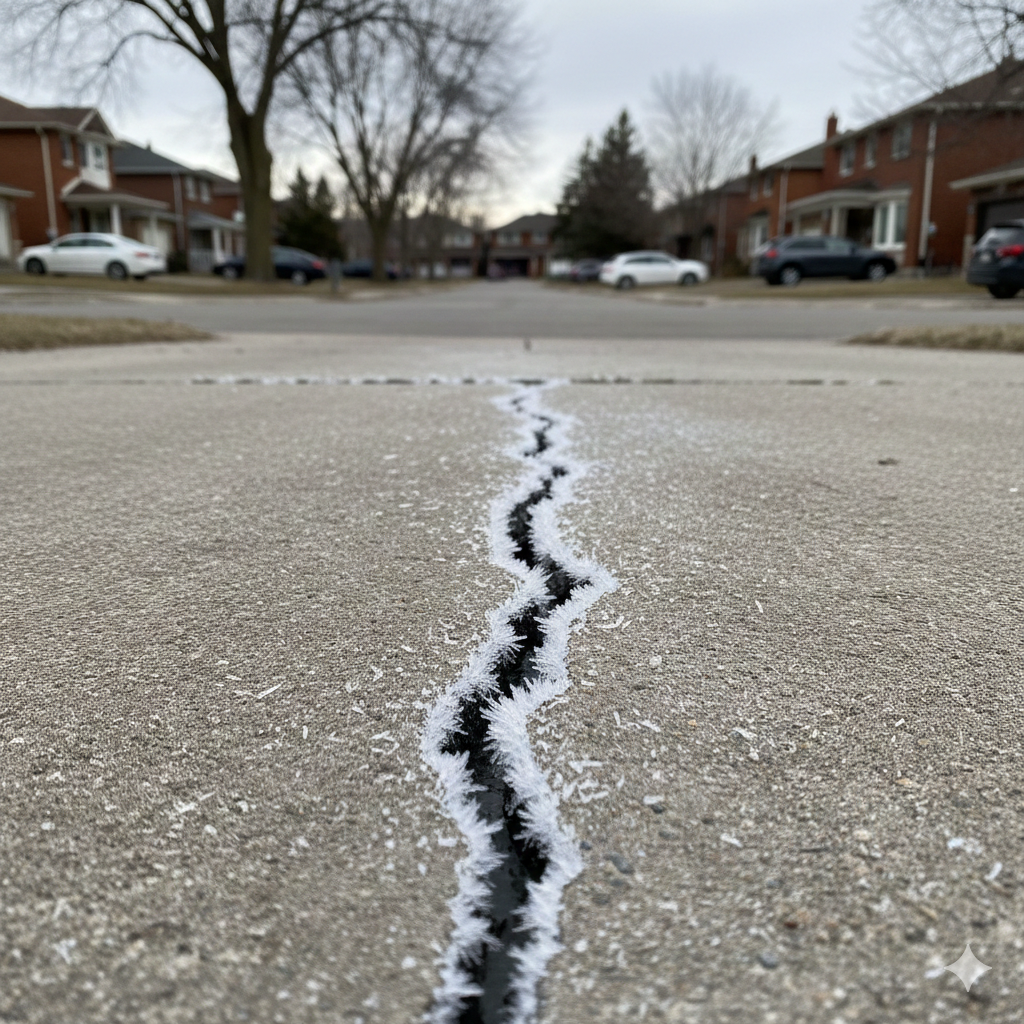
Hamilton winters in Ontario are unpredictable; one day it’s warm and sunny, and the next it’s snowing and icy. That’s pretty normal around here, but you wouldn’t want that on your concrete. “Driveways, walkways, patios, and even the foundation itself are very likely to be damaged by frost during repeated freeze-thaw cycles.” If homeowners and property managers understand how this process works, they may be able to take steps to protect their concrete from damage that could cost a lot of money.
What Are Cycles of Freeze and Thaw?
The daytime temperature is above freezing, and the nighttime temperature is below freezing. And when the sun comes out during the day, the snow and ice melt and turn into water that gets into those tiny pores and cracks. Then, when everything cools down, the water trapped in the cracks freezes, making them bigger. The water filling and draining in cycles keeps breaking down the concrete from the inside out, making it more likely to crack and wear down on the surface.
The Effects of Freeze–Thaw Weather on Concrete
Concrete looks solid, but it is actually porous. For instance, during the winters in Hamilton, moisture can easily pass through these pores. When water freezes, it expands, putting stress on the concrete. This stress can cause cracks, surface scaling, and damage to the structure above. That damage can worsen more quickly if the temperature changes a lot, especially in late winter or early spring.
During the winter, concrete often gets damaged in these ways:
As winter weather worsens outside, you might notice changes in how your concrete looks and feels inside and around your home. Common problems include spalling, cracking, slabs that aren’t level, and chipped or breaking edges. In very severe cases, water can reach the level below and cause damage to buildings, which can be dangerous over time. Ignoring the signs of trouble often leads to more costly repairs.
Reinforced Concrete: Keeping Concrete Safe and Fixing It
Reinforced Concrete, based in Hamilton, knows that Ontario winters are not good for concrete. Their team knows how to fix damage from freezing and thawing by using the right mix, adding support, and practicing how to fix things so they last longer. Their work helps prevent further wear and tear, making those old concrete surfaces last longer, whether they are patching existing damage or installing half-reinforced concrete sections to withstand cold weather.
Hamilton Homeowners: Tips and Advice
There are things homeowners can do to limit the damage caused by freeze-thaw action:
- Coat concrete and other surfaces that let water through to slow down the flow of water.
- Get rid of it right away; don’t let the snow pile up.
- Don’t use harsh chemicals to remove ice, as they can damage concrete.
- Fix small cracks before they turn into big ones.
- Get a professional to look at it after winter.
- Fixing these problems can help keep your home and the surrounding area safer and less likely to be damaged.
In conclusion
This is where the Hamilton, ON Freeze–Thaw Cycles are one of the most common types of concrete damage, and winter weather is both a cause and a problem. Every year, temperature fluctuations and moisture seep into concrete, which has to withstand freezing cold and blazing sun. But homeowners can save some money for a rainy day by spending those six figures on repairs if they understand the risks and act quickly. When it’s time to bring out the big guns, our experienced and reliable team members will give you good advice and years of peace, all year long. year-round.